

It’s really not that hard once you understand that all live water filters work on the same three basic principles:
- The Mechanical stage
- The Biological stage
- The Sterilisation stage
Where the “Black Art” comes in is that all three stages interchange and interact and get mixed up. Sorry – sounds daft I know, but you will get biological filtration going on in the mechanical filter and mechanical filtration going on everywhere. Sterilisation is simple – kill off things that come into contact with this part of the filter.
I’ll explain further as we go along
Before I go into details about what filtration – maybe we need to consider why we need to filter at all.
I often hear people say a natural pond does not have a filter – so why should I bother?
The fact is that all bodies of water in their natural state are alive, with all sorts of things including denitrifying bacteria living in the environment. These organisms establish a balanced bio system wherever and whenever they can.
A natural, wild fresh-water mud pond will have very few fish in it. Nature has a way of keeping it balanced. If it gets overstocked things die off. In an artificial garden pond, we need to give nature a hand by adding pumps and filters to help keep the water healthy.
Healthy water equals healthy fish. People regularly tell me “My water is FINE” but when pressed they can’t tell me if there is actually any AMMONIA, or NITRITE in the system. These are the people that the Koi breeders call “FILTER FOOLS”
And I don’t disagree. If you do not know what is going on with the pond water how can you possibly know what is going on with the fish?
But – back to filtration –
MECHANICAL FILTERS
A very simple concept – an area of the filtration system where solid particulates can be removed from the system. This can be done in many ways, the simplest way being to get the pond water into a large chamber where it slows down allowing the CRUD to settle to the bottom of the tank from where it can be removed when convenient. A more efficient system has a smaller tank with a bottom that slopes down to a drain that can be flushed when needed.

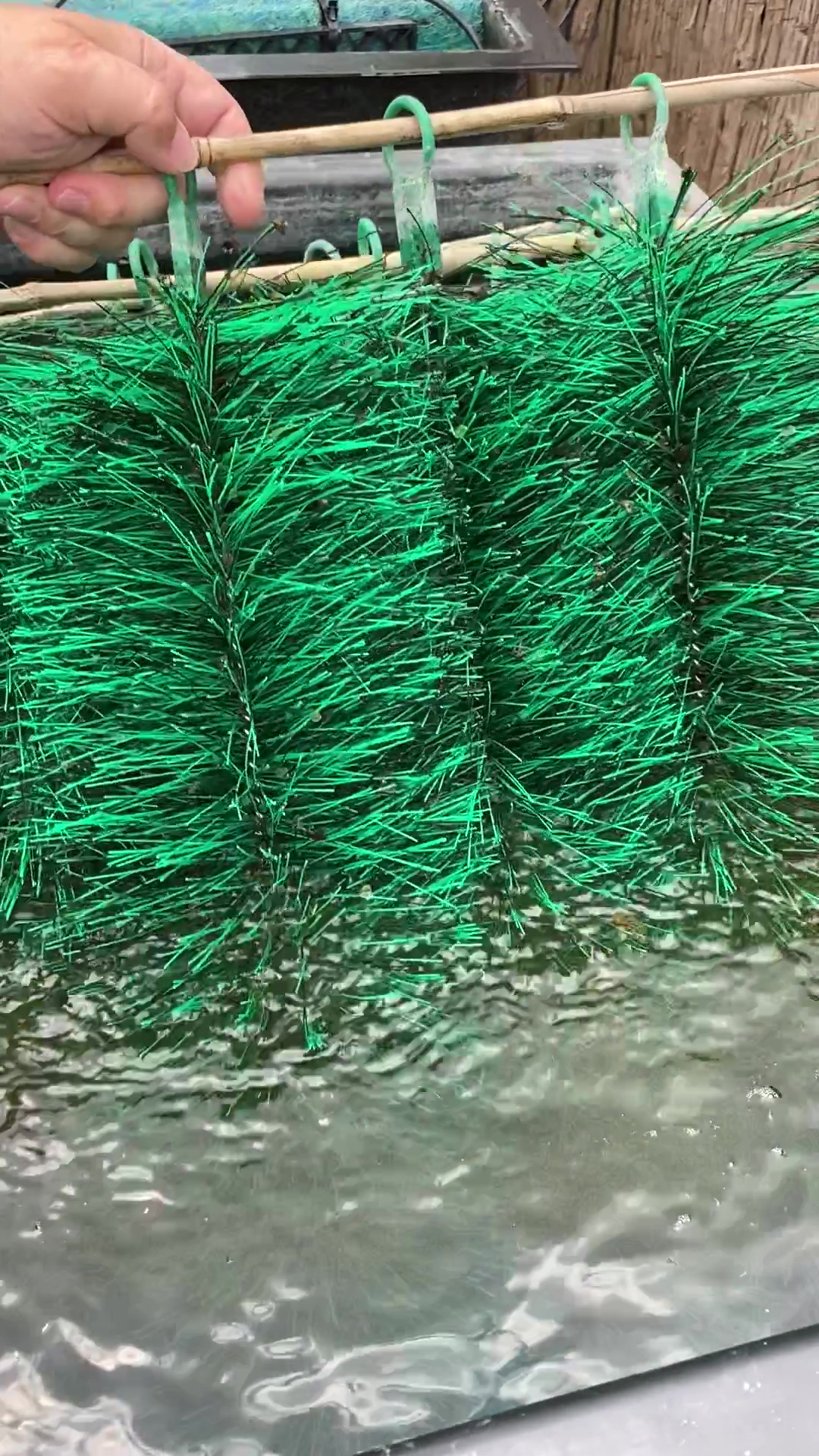
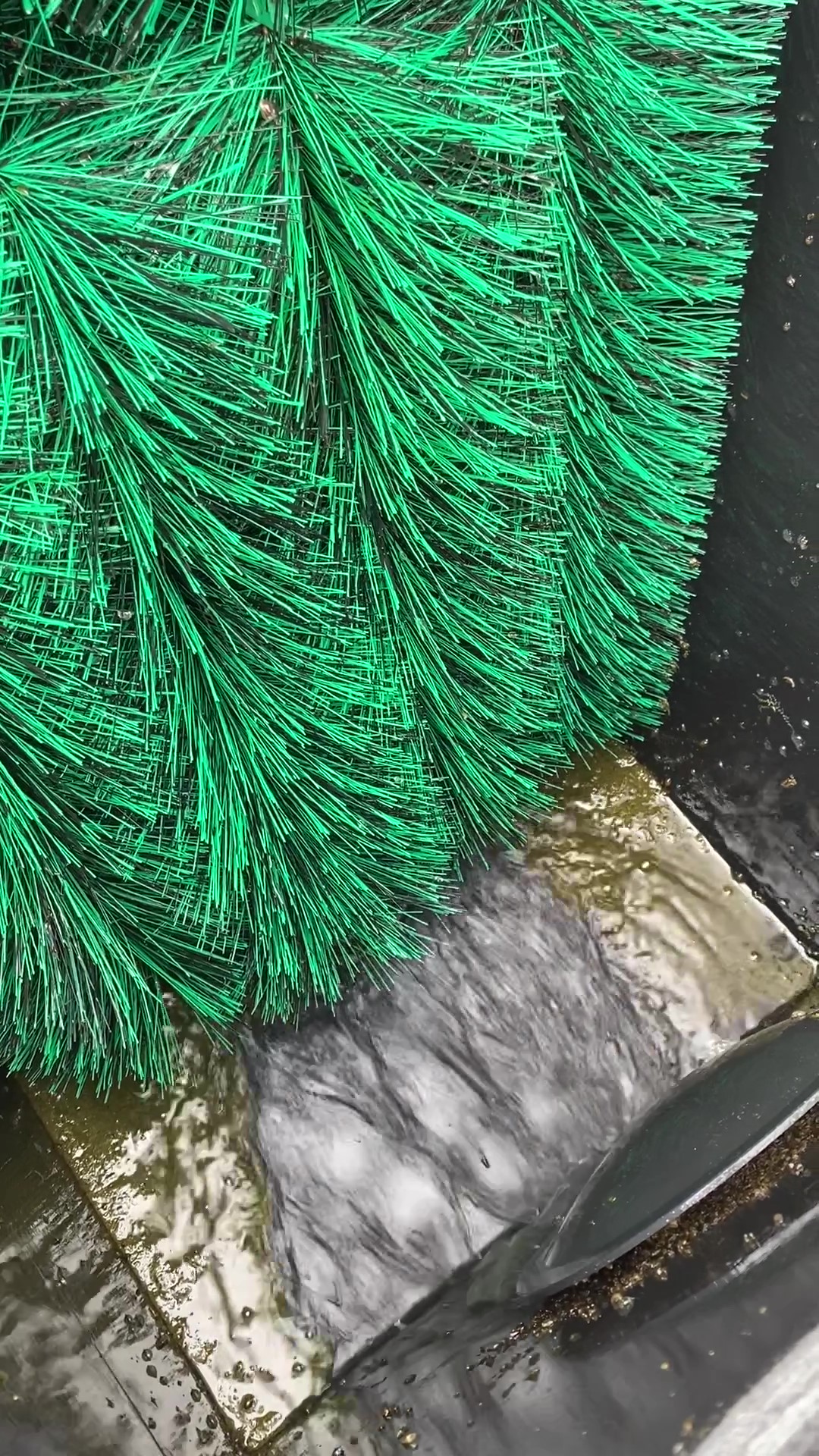
To increase the amount of CRUD that is trapped in this chamber large numbers of filter brushes can be suspended in the water to catch even more CRUD. Filter brushes are very efficient mechanical catchers, so long as the water flow through them is not too fast.
The mechanical chambers are not considered as part of the biological filtration – so they can be washed off with anything to keep them clean. An isolation valve between the mechanical and biological chambers and an exit valve to waste makes this easy.
Why make things difficult?
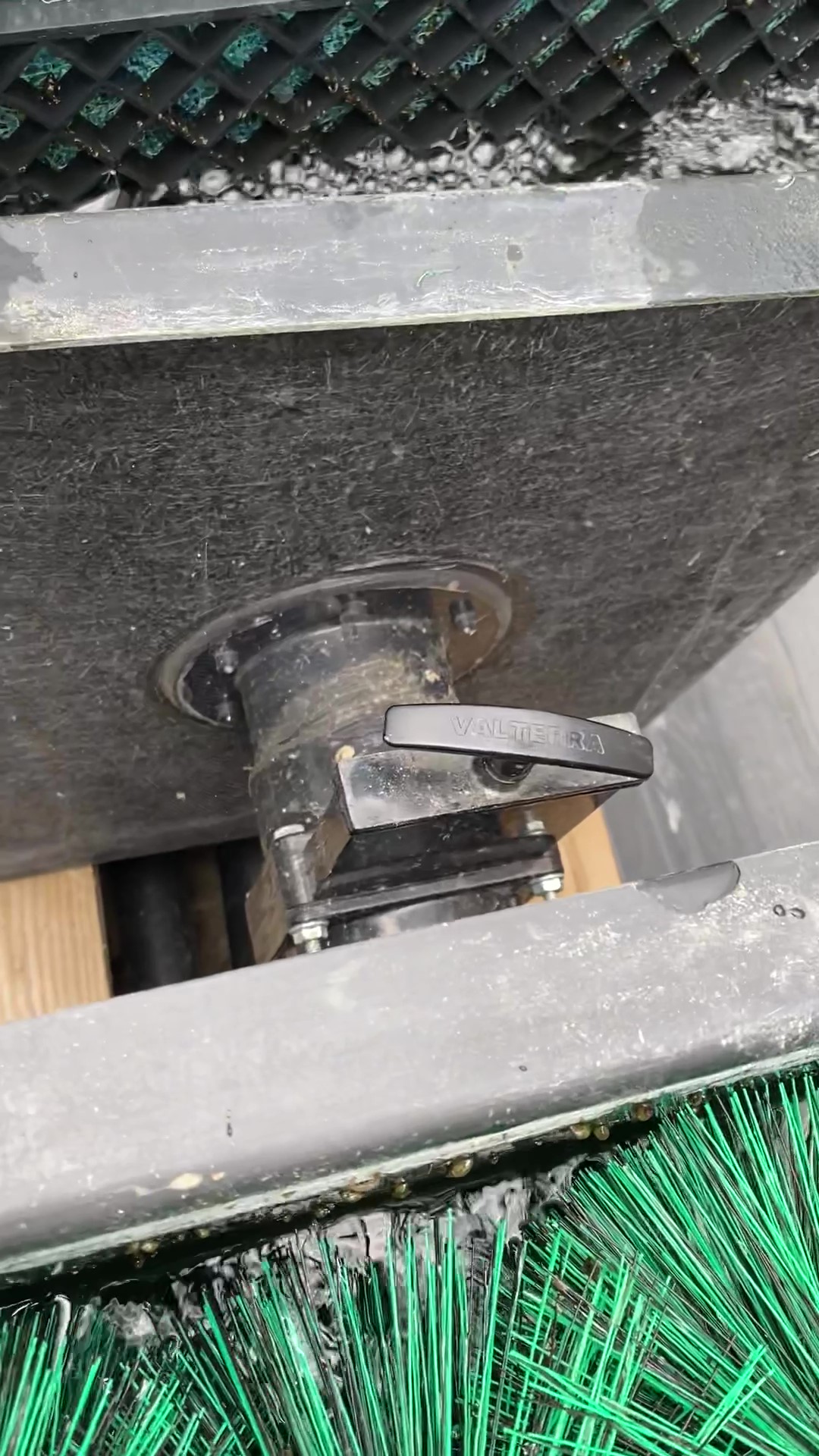

The latest fashion is to instal very sophisticated maintenance-free DRUM FILTERS that catch the CRUD and automatically wash it away to waste.
I have mixed feelings about drums, if they are not set up properly, they can fail mechanically. And – because they are on auto clean – people do not notice they are not working until their water condition crashes. Secondly, if not installed to pick up all the Crud in a system, the CRUD will build up in “dead” areas leaving detritus in parts of the filters with low available oxygen where anaerobic bacteria will grow – which can be the cause of disease.
Many of these drums do not collect the very finest sizes of waste matter which can end up back in the pond causing constant cloudiness.
AND, lastly, they are very expensive to purchase.
Personally, over the years I have tried them all and have gone back to the old ways – slow, crossflow chambers with three or four rows of filter brushes suspended in the slow flow of water. The bottom of this chamber slopes steeply down to a collection area which can be flushed to waste just by opening a valve. The amount of crud the brushes trap is phenomenal, and it can just be washed away leaving a clean chamber and clean brushes.
The crud free water can then pass to the next part of the system.
THE BIOLOGICAL FILTER
The concept is again simple – pass the water through media with a huge surface area, which nurtures an enormous aerobic bacterial colony, which will digest the dissolved pollutants in the water.
Sounds simple – but there is a problem. The polluted water, high in ammonia, needs to be in contact with the good bacteria for long enough to enable the bacteria colony to do its job. If the flow is too fast, the water wizzes by and the bacteria don’t get a chance to work their magic. If the water movement through the media is too slow, it becomes anaerobic (low in oxygen) and bad bacteria will grow and kill the fish. So you see the problem – water too fast and the denitrifying Bacteria can’t neutralise the waste in the system efficiently – too slow and not enough oxygen is available to grow the good bacteria.
Solution – introduce air (pumped air & air stones) to the biological section of the filter to keep it healthy.
This can be achieved in many ways with all sorts of media for the aerobic bacteria to grow on. Different types of media all have their good points and their bad points – there is no such thing as the perfect filter media. Most experienced koi keepers have their favourites, but if they are honest everything that has been tried works well, but all create one problem or another.
Examples
Years ago, we built big chambers, filled them with gravel and forced the polluted water through them. They were very good – they worked well until they blocked up and the weight of the gravel collapsed the gravel tray supports – digging out a ton of stinking gravel was no fun believe me!!
So, then we tried lighter medias with an even larger surface area, like Alfa Grog. This too worked well but we had to use it in up-flow systems that developed water tracking pathways, and which therefore allowed the water to bypass large areas of the media.
Then Japanese Matting became popular, but again as we were using it in an up-flow system. There had to be voids in the mats or they too would block up.
During these early days we experimented with all sorts of shapes and sizes of filter chambers.
Air towers are very good at treating water in an oxygen enriched environment- but -in the early days, as with the filter chambers, the water falling down through the media would find the path of least resistance and just track and bypass most of the filter media.
Moving bed filters have become popular – light weight plastic media in a confined chamber with water and air bubbling up through the column, on which the good bacteria can grow and do its job. Problem – getting the flow right. Too much agitation just washes the bacteria off the media,
A lot of modern filters create such a rich environment for bacterial growth and have such a fast water flow through them, that again, some of the bacteria sloughs of the media and ends up as fines back in the pond.
WHICHEVER WAY YOU ACHIEVE IT – ITS STILL THE AEROBIC BACTERIA
THAT ACTUALLY DO THE JOB
So, how we present the water to the bacteria, so long as the dwell time and the oxygen levels are right, doesn’t make any difference to the denitrifying process. The same AMMONIA from waste will be converted to NITRITES and then NITRATES by the denitrifying bacteria.
(I will not touch on the small box or pressure filters filled with sponges that make all sorts of claims on what they can do, but do not keep Koi alive for very long)
How does this work day to day?
As you can imagine, over the last fifty years I have seen so many filter ideas come and go – some ingenious – some very expensive – and some just plain daft.
The addition of modern technology has changed the need to get hands on with filters so much these days, but again I am of two minds about this. Is it better to have a system that you have to observe and watch the levels of CRUD build up and act accordingly? – or a system you can just ignore on a day-to-day basis?
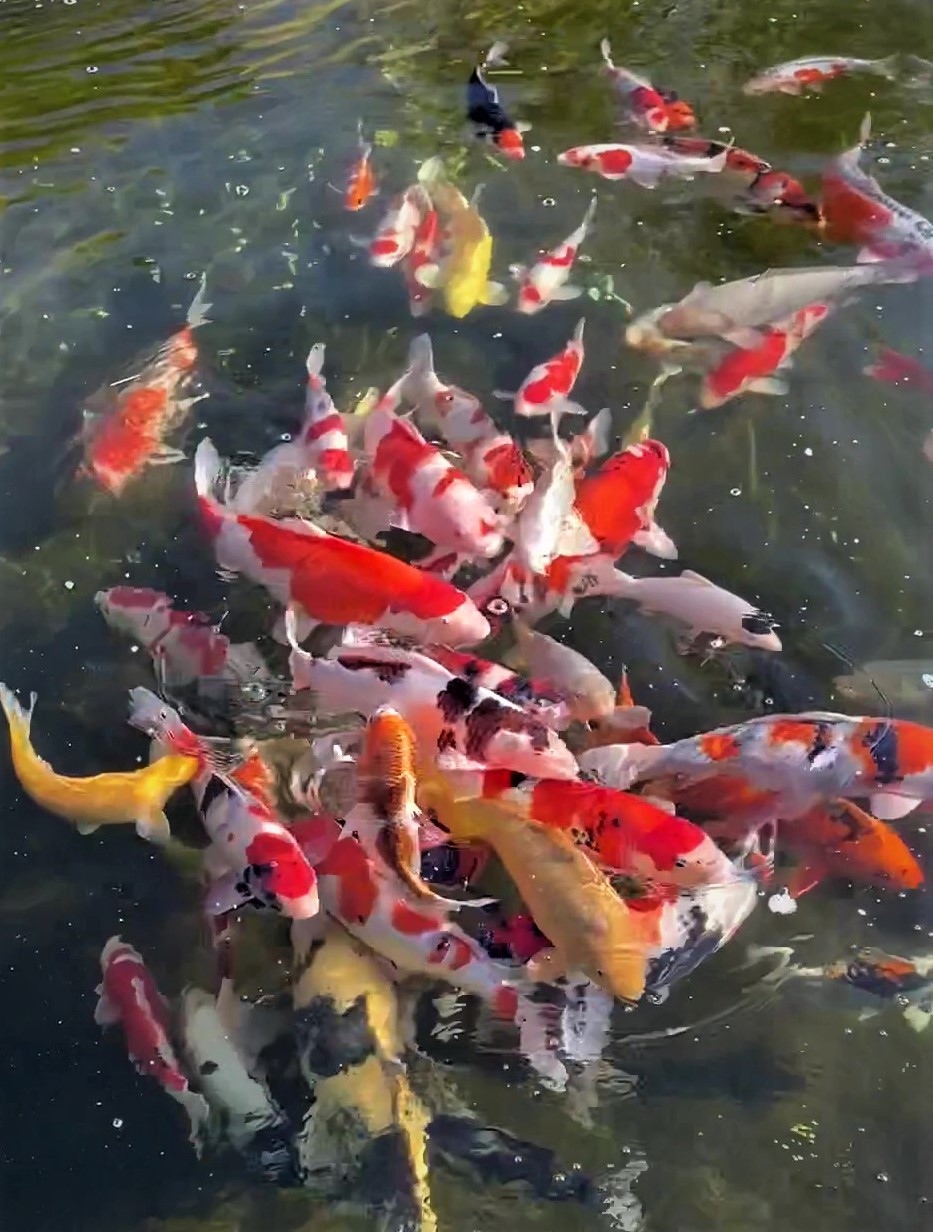
Myself, I have a daily routine. I look at the pumps working, then the level of CRUD that has built up in the filter, and then decide whether, or not, to clean the mechanical part today or to leave it for a bit longer. Usually – leave it and go and feed the fish – they, the fish, always tell me if their filters need a quick clean.
If they are slow to feed, or jumpy, or just look off, small alarm bells start ringing in my head, and I spend more time observing my koi to try and work out what has upset them. Nine times out of ten it’s the water chemistry that has drifted just a little – not enough to show up on even the most sensitive test kit, but the Koi can taste it in their environment, and as I have been watching my friends for more than fifty years, I can tell, when they are not happy.
So, I go and clean the mechanical filter part of their system, and on their next feed hopefully all is well, they all rush over to say hello (they are really looking for food)
IF THEY DON’T ACT NORMALLY – I START WATER TESTING
These things change from day to day – which is part of the joy of keeping koi, if you don’t get a buzz from just feeding them and watching them, maybe you are keeping the wrong pets.
STERILISATION
UV STERILISERS have made the job of keeping clear water easier because they kill algae in the water that we pass around the UV bulb. AROUND being the operative word.
A UV is only at its most effective when the tube itself is creating UV at the optimum wavelength to kill the algae.
UV tubes deteriorate with age, and the silicon outer tube can become dirty, both of which can reduce effectiveness.
The flow of water around the tube has to be at its optimum (often UV’s are fitted incorrectly so that the water doesn’t fill the entire tube). The flow should not be too fast, as that means the algae are not exposed to the UV rays for long enough
Job done – efficient, easy and works brilliantly as long as the mechanical part of your system can collect fines such as dead algae. So that you can discharge the CRUD to waste.
Chemical treatments
What is not always realised is that many of the chemicals that are useful for treating Koi aliments are in fact anti-sceptics and anti-bacterials. When they are used to help treat problems with the Koi – they also treat the filter – knocking back the GOOD bacteria as well, and hence reducing the effectiveness of the filter temporally.
Eg. Add a good dose of Formalin, Malachite Green (FMG), and Acriflavine and watch the water quality get worse. ALL the Koi mooch around looking fed-up for a few days, until the filter recovers.
Beware some chemicals, if used together, can be very toxic in a live pond system.
Other add on’s
These are the extras that are sold to make the filter even better (?)
Again, I have my doubts, many extras are not necessary if the main filter is big enough for the job and can cope with an increased load over time.
What do I mean by this? – that a pond set up to keep, say, ten small koi, will have a biological load of X. Over time, the koi will grow, and the biological load will increase to X ++++, as the owners feed more to the Koi and the Koi put more waste into the pond.
I once calculated that over the space of a few years, a pond we knew, had increased the biological loading from when it was built, by more than a thousand times. And when this was pointed out to the owner in simple terms – imagine ten small chicks had grown into hundreds of large chickens – he suddenly realised that his small chicken coop would not do.
He stopped saying “But the pond has been fantastic for three years, it must be OK” and we made new additional filters to bolt on to his old set up. And – the ten teenage Koi started to grow again. His biggest Koi is now over twenty kilos, and his filter is now almost bigger than his pond.
Beware this hobby can change your life.
THE SIMPLE LIFE
My old friend and mentor Peter Waddington (deceased), the author of the famous Koi bible KOI KICHI, summed it up rather well when he said:
“The cheapest, and the best, way to build a Koi pond is to build it once and build it properly”.
Over the years I have been involved with many people and their ponds who have struggled – and a few who have taken good advice and built it once. It may cost more in the first place but, will save money in the long term – the rewards over time are worth more than money can buy.
My advice is this. Ask yourself, your designer, your builder, this one question –
“HOW BIG WILL MY INDIVIDUAL KOI GET IN THIS POND?”
If the answer is NOT 2-3 feet, said with confidence, keep looking for help from someone who knows what Koi actually are – large animals that should reach over 60cm long by the time they are five years old.
The simple life?
- – a big deep hole built to last. A MINIMUM of 5 feet deep. Large Koi need deep water, especially in cold conditions
- – with at least one bottom drain, feeding a big filter
- – a big settling chamber full of brushes with a bottom drain.
- – bigger, cross flow biological filter chambers with Japanese Matting cartridges, loads of air and a bottom drain.
- – even more cross flow biological chambers with bottom drains,
- – an empty chamber to run the pumps from
AND
- a bank of big UV’s on the way back to the pond
SIMPLE Anything else is just ADD ON’S
BY Geff Lambert AIIP AMPA
KOIMAN ENTERPRISES